

Last reviewed: August 2026
The Short Answer
Natural flavors are flavoring compounds that originate from a plant or animal source, but by the time they reach your food, they're often highly processed, blended with solvents and carriers, and built to do one job: make a product taste better. They're legal, regulated, and generally considered safe. The problem isn't that they're necessarily dangerous. The problem is that two words on a label can stand in for a complex, undisclosed formula, and federal law lets it stay that way.
That gap between what the label says and what's actually in the bottle is the loophole.
What You'll Learn
- What natural flavors actually are
- The FDA definition (and what it leaves out)
- Why natural flavors are in one in three products
- The four companies that control your flavor
- What's actually inside "natural flavors"
- Natural flavors and allergies
- Natural vs. artificial flavors
- Whether they're allowed in organic foods
- The LÜME standard
What Are Natural Flavors?
Natural flavors are flavoring ingredients derived from natural sources: fruits, vegetables, herbs, spices, dairy, eggs, meat, seafood, or fermentation products. Their job is to add or enhance flavor, not to provide nutrition.
That last part matters more than most people realize.
When you see "natural flavors" on a label, you probably picture something simple: vanilla from a bean, strawberry from a berry, lemon from a peel. But in packaged food, "natural flavors" almost always means something more engineered.
Under U.S. labeling rules, a natural flavor can start from a natural source and then be extracted, concentrated, distilled, heated, fermented, treated with enzymes, or blended into a multi-component "flavor system" before it ever touches your food.
So yes, the original source has to be natural. But that does not mean the final ingredient is simple, whole, minimally processed, or nutritionally meaningful.
As Melissa Maccoux, MS, RDN, a registered dietitian nutritionist at Holland Hospital, puts it, natural flavors are essentially "a flavor enhancer that is derived from a natural product," the operative word being enhancer.
The FDA Definition of Natural Flavor
The FDA's official definition lives in 21 CFR 101.22. It defines a natural flavor as an essential oil, oleoresin, essence, extractive, protein hydrolysate, distillate, or product of roasting, heating, or enzymolysis that contains flavoring constituents derived from natural sources, including:
Spices, fruits and fruit juices, vegetables and vegetable juices, edible yeast, herbs, bark, buds, roots, leaves, meat, seafood, poultry, eggs, dairy, and fermentation products.
The regulation is explicit about one thing: the significant function of a natural flavor is flavoring, not nutrition.
This is where consumer perception and regulatory reality split. Shoppers read "natural" as clean, simple, close to whole food. The regulation only cares about where the flavoring substance originated, not how processed it became, and not how much the final label discloses.
Why Are Natural Flavors So Common?

Natural flavor is one of the most pervasive ingredients in the modern food supply.
According to the Environmental Working Group's March 2026 analysis (authored by EWG scientists David Andrews, PhD, and Tasha Stoiber, PhD), "natural flavor" is now the fourth most common ingredient across the more than 150,000 foods in EWG's Food Scores database. It's added to roughly one in every three products, with only salt, water, and sugar appearing more often. More than 15,000 products in that database contain both natural and artificial flavors.
And it's not a junk-food problem. You'll find natural flavors in sparkling waters, protein bars, yogurts, cereals, granolas, electrolyte and energy drinks, gummies, ice creams, nut milks, coffee creamers, kids' snacks, supplements, and the entire universe of "better-for-you" products marketed as clean, plant-based, low-sugar, keto, paleo, or organic.
That's the quiet power of the term. A brand can strip out "artificial flavors," add "natural flavors," and the product instantly feels cleaner, even though the flavor system is doing the exact same job: making processed food taste more appealing than its actual ingredients would on their own.
The Industry Behind Your Flavor (Most People Have Never Heard Of It)
Here's the part the front of the package never mentions: the flavor in your "naturally flavored" sparkling water probably wasn't created by the brand on the label. It was likely engineered by one of a handful of giant flavor houses you've never heard of.
The global flavors-and-fragrances industry is an oligopoly. More than half of the entire global market is controlled by just four companies: Givaudan, International Flavors & Fragrances (IFF), Symrise, and DSM-Firmenich, according to Statista and multiple industry analyses. Givaudan alone generated roughly CHF 7.5 billion in sales in 2025. IFF offers more than 90,000 individual products to food manufacturers.
These are the labs that decide what "strawberry," "vanilla," and "birthday cake" taste like in thousands of products on the shelf.
And the most important fact about this industry? It largely regulates itself.
The FDA's Substances Added to Food inventory listed more than 3,000 flavoring agents as of March 2026, but only about half of them went through formal FDA review. Roughly 2,000 were cleared for use not by the FDA, but by an industry trade group: the Flavor and Extract Manufacturers Association (FEMA), under the "Generally Recognized as Safe" (GRAS) designation. GRAS was originally meant for kitchen staples like vinegar and salt. Today it functions as a self-certification pathway. As EWG's scientists summarize it, "the flavor industry largely regulates itself."
That's not a conspiracy. It's just how the system was built. But it's worth knowing before you assume "natural flavor" means "vetted by a regulator" or "healthy."
Why Food Companies Use Natural Flavors

1. Consistency
Real ingredients vary. A strawberry picked in June tastes different from one picked in October. Vanilla shifts by region, crop, and curing method. Natural flavors let a brand make every single batch taste identical, and at scale, that uniformity is worth a lot.
2. Cost
Real vanilla bean, real fruit, real citrus oil, and real spices are expensive. A dose of a flavor system can create the impression of an ingredient without the brand having to use much of the actual ingredient.
3. Shelf Stability
Whole-food ingredients oxidize, fade, clump, and lose potency. Flavor systems are engineered to survive processing, shipping, and long shelf lives.
4. Consumer Perception
"Natural flavor" simply sounds better than "artificial flavor." It gives brands a cleaner front-facing story without requiring full transparency on the back, and shoppers reward it. In the 2025 IFIC Food & Health Survey, nearly two-thirds of consumers said ingredients influence their food purchases, and when asked to define a "clean ingredient," the single most common answer (22%) was "not artificial or synthetic." In other words, the word "natural" sells, which is exactly why the label term is so valuable to brands, transparent or not, even if they're nearly identical to artificial flavors.
5. Craveability
Many packaged foods are deliberately engineered to taste more intense than real food. EWG notes that some flavors are even designed to be short-lived, fading fast to encourage another bite. Emerging research suggests these added flavors may even override the body's natural hunger signals and contribute to overeating.
The goal isn't always nourishment. The goal is repeat purchase.
What's Actually Inside "Natural Flavors"?
This is what consumers never see.
A natural flavor is rarely a single ingredient. It's frequently a proprietary system that can contain more than 100 chemicals, including flavoring compounds, extracts, distillates, solvents, carriers, emulsifiers, preservatives, stabilizers, and processing aids.
And here's the number that should stick with you: according to EWG, the flavor compounds themselves are often the minority of the mixture. The solvents, emulsifiers, modifiers, and preservatives can make up 80% to 90% of what's in that "flavor."
The finished label says two words:
Natural flavors.
The issue is that the label doesn't tell you which additives there are, or how much, or what the negative health impacts they can cause by being consumed over a period of time.
Hidden Solvents, Carriers, and Processing Aids

Flavor compounds usually can't get from the extraction facility into your food on their own. A flavor molecule might not dissolve in water, might evaporate too fast, or might break down under heat or acidity. So it gets help from other ingredients:
Ethanol, glycerin, propylene glycol, gum acacia, modified starches, maltodextrin, vegetable oils, polysorbates, citric acid, and various preservatives or antioxidants.
Some are natural, some synthetic. Some are used only during processing; some remain in trace amounts.
And here's the regulatory gap: under FDA rules, certain incidental additives and processing aids don't have to be listed on the finished label when they're present at insignificant levels and serve no technical function in the final food.
So the consumer sees "natural flavors." The manufacturer knows the full formula. The public usually doesn't, because federal law protects flavor formulas as trade secrets.
Are Natural Flavors Bad for You?
It isn't that natural flavors are always dangerous. It's that they're completely misunderstood and can easily manipulate consumers. The better questions are:
- Are they transparent? No.
- Are they nutritionally meaningful? No.
- Are they always made from the ingredient pictured on the front? Not necessarily.
- Are they simple? Rarely.
- Can they be a problem for people with allergies or sensitivities? Potentially, yes.
That's the real issue. Scrutiny. However, given the facts, we'll let you decide if you want to consistently ingest them.
Natural Flavors and Allergies: What Consumers Should Know

For people with food allergies, "natural flavors" can be genuinely frustrating, because the source isn't always obvious from the label.
U.S. law, under FALCPA and the FASTER Act, requires the nine major food allergens to be declared on packaged foods when present. As confirmed by the FDA, those nine are: milk, eggs, fish, crustacean shellfish, tree nuts, peanuts, wheat, soybeans, and sesame (added as the ninth major allergen under the FASTER Act, effective January 1, 2023).
So if a natural flavor contains one of these nine allergens, it generally must be disclosed, but rarely is. And several gray areas remain.
1. Not every sensitivity is a major allergen
Many people react to ingredients outside the nine-allergen law entirely: corn-derived ingredients, certain gums, sulfites, yeast-derived compounds, specific botanical extracts, or food chemicals like salicylates. A person can lack a classic IgE-mediated allergy and still react to a flavor system.
2. The source can be unclear
A natural flavor can come from a plant or an animal. Unless a product is certified vegan, kosher, or halal, the label may not tell you which. That matters for vegans, vegetarians, people avoiding dairy, those with religious restrictions, and people with conditions like alpha-gal syndrome.
3. Trace allergens can matter to highly sensitive people
For most consumers, tiny amounts of carriers or processing aids are a non-issue. For highly sensitive individuals they are not, and that group is far larger than most people assume. An estimated 33 million Americans live with food allergies, roughly one in ten people, according to FARE, and the most recent CDC data, released in 2026, puts diagnosed food allergy at 6.7% of adults and 5% of children. More telling for this issue: 51% of adults and 42% of children with food allergies have already had a severe reaction. For them, "trace" is not a safe word. A small amount of an undeclared carrier, processing aid, or flavor component can be the difference between fine and the emergency room, and reactions frequently come from foods that were believed to be safe.
That's exactly why people with severe allergies are routinely advised to contact manufacturers directly when a label just says "natural flavors." When the formula is hidden, the people with the most to lose are the ones left guessing.
Here's a question worth asking: food allergies in the U.S. have risen sharply over the same decades that natural flavors became ubiquitous. However, there are multiple drivers, including changes in early allergen exposure, the microbiome, and the broader shift toward ultra-processed diets, and the best research to date finds that processed foods carry more allergens mainly because they contain more ingredients, not because of flavorings themselves. What is clear is simpler and harder to argue with: whatever is driving the allergy epidemic, a label that hides its full formula makes that epidemic harder to manage for the millions of people living with it.
4. "Natural" does not mean "allergy-safe"
Milk is natural. Peanuts are natural. Tree nuts, soy, and sesame are all natural. The word tells you nothing about whether an ingredient is safe for your body.
How Natural Flavors Can Contribute to Reactions
IgE-mediated allergic reactions are the classic pathway: the immune system flags a food protein as a threat, produces IgE antibodies, and on re-exposure releases histamine and other inflammatory chemicals, causing hives, swelling, vomiting, wheezing, throat tightness, or, in severe cases, anaphylaxis. If a natural flavor contains protein from a major allergen, it must be declared, but consumers may not know the source of non-major triggers unless they ask.
Non-IgE sensitivities are harder to test, label, and trace. Some people experience digestive, skin, respiratory, or neurological symptoms from preservatives, fermentation-derived compounds, acidulants, solvents, gums, or naturally occurring plant compounds, none of which trigger IgE antibodies. This doesn't mean all natural flavors necessarily cause these reactions. It means the lack of transparency makes them harder to investigate.
Dose and frequency add up. One product with natural flavors is unlikely to matter for most people. But a typical day might include flavored creamer, a protein bar, sparkling water, yogurt, cereal, an electrolyte drink, and a snack bar, each with its own flavor system. The science on cumulative exposure to complex flavor mixtures is still limited, which is one more reason transparency matters.
Natural Flavors vs. Artificial Flavors
Here's the truth most clean-label brands won't tell you: natural and artificial flavors are often nearly identical.
The only legal difference is the source. Natural flavors must originate from a plant, animal, or fermentation source. Artificial flavors come from sources that don't meet that definition. But chemically, the final molecules can be exactly the same.
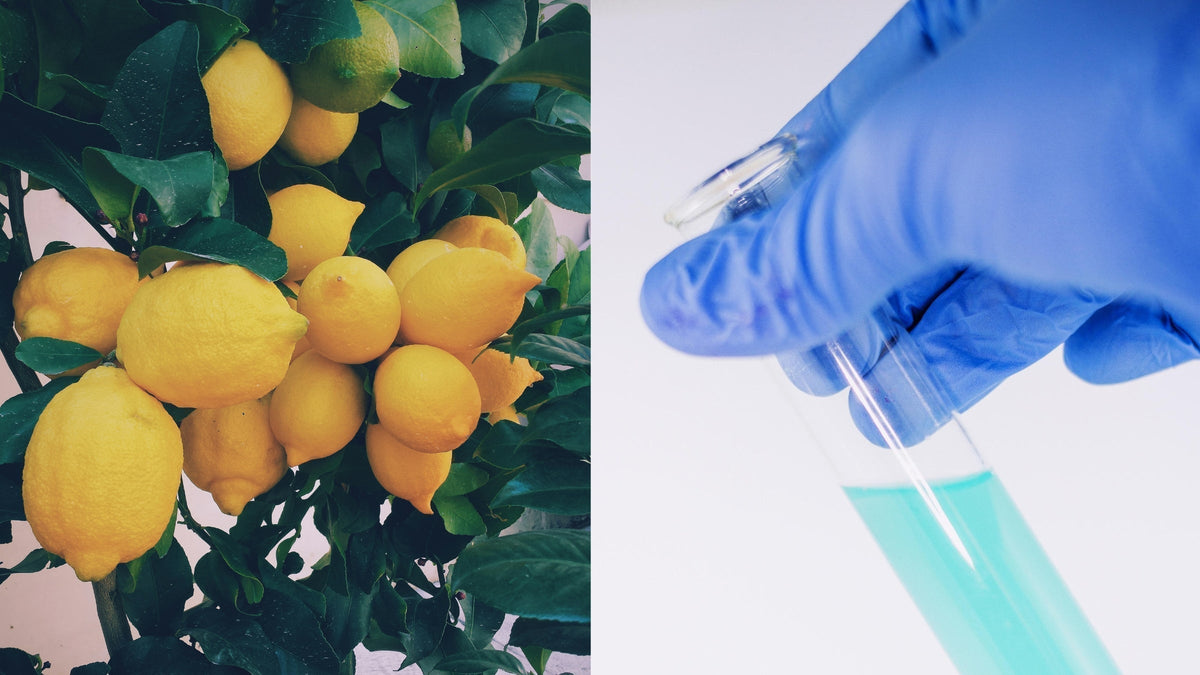
EWG illustrates this with limonene, the compound that tastes like citrus. Limonene can be extracted from citrus peel using chemical solvents, and it counts as "natural." Or it can be synthesized in a lab, and it counts as "artificial." Same molecule. Your body can't tell the difference based on a label.
There's even a quirk that surprises most people: if an added flavor creates a new taste rather than reinforcing an existing one, say, blueberry flavor in a plain muffin, the FDA requires it to be labeled artificial, regardless of its source.
None of this makes sourcing irrelevant. Sourcing can matter for environmental, ethical, allergen, and transparency reasons. But the word "natural," on its own, does not automatically mean healthier, safer, less processed, more nutritious, or closer to real food. That's the part food marketing is built to blur.
The "Made With Real Fruit" Problem
Natural flavors thrive in products that imply a connection to real ingredients that barely exists:
- Strawberry snacks with little actual strawberry
- Vanilla products with no visible vanilla bean
- Lemon drinks with no meaningful lemon juice
- Blueberry bars with more flavoring than blueberries
- "Birthday cake" foods built entirely from flavor systems
The front of the package shows fruit, flowers, or indulgence. The back of the package says natural flavors.
This means you have to read the ingredient list. If the named flavor is on the front but the real ingredient is absent, minimal, or buried after "natural flavors," that's a sign the product leans more on flavor technology than on food.
Amy Shapiro, RD, told The Kitchn in 2025 that the more specific an ingredient, the better. She advises looking for single-ingredient extracts like vanilla extract, lemon oil, or cocoa, and being wary of products that simply list "natural flavors," since those can still be highly processed with FDA-allowed additives like preservatives.
Why "Natural Flavor" Is a Loophole
Natural flavors are legal. They're regulated. They're everywhere. And they're still one of the biggest loopholes in food labeling, because the phrase delivers a feeling of simplicity without requiring real transparency.
The core problem in one sentence: one label term can represent an entire proprietary formula, multiple flavor compounds, plus carriers, solvents, emulsifiers, stabilizers, and processing aids, and the consumer only sees two words.
The industry's defense is legitimate: flavor formulas are expensive to develop, and companies don't want competitors copying them. That's a real business interest. But from where you're standing in the grocery aisle, the result is the same, a lack of visibility. If you're trying to avoid certain additives, allergens, animal-derived ingredients, or ultra-processed foods, "natural flavors" simply doesn't give you enough to go on.
How to Read Labels for Natural Flavors
1. Look for the real ingredient first. If it says vanilla, look for vanilla bean, extract, or powder. If it says strawberry, look for strawberries. If the real ingredient is missing and "natural flavors" is doing all the work, that tells you something.
2. Watch for "flavored" language. "Vanilla flavored," "strawberry flavored," and "naturally flavored" often signal that the product doesn't rely primarily on the real ingredient.
3. Check ingredient order. Ingredients are listed by weight. If the real ingredient appears near the end, after sweeteners, oils, starches, gums, and flavors, there's very little of it in there.
4. Be skeptical of the "health halo." Natural flavors are extremely common in products marketed as keto, low-sugar, high-protein, plant-based, gut-friendly, clean, or organic. A wholesome-looking package is not the same as a transparent ingredient list.
5. Contact the brand if you have allergies. A genuinely transparent brand should be willing to tell you the flavor's source, whether it contains any major allergens, whether it's vegan, and what carriers or solvents are used. If they can't or won't answer, that's an answer too.
Are Natural Flavors Allowed in Organic Foods?
Yes, but the rules are stricter.
Under the USDA's National Organic Program (Policy Memo 11-1, most recently updated in March 2024), nonsynthetic (conventional, but non-organic) flavors may only be used in organic products when organic flavors aren't commercially available, and, critically, those flavors "must not be produced using synthetic solvents and carrier systems or any artificial preservative."
But here's what "organic natural flavor" can still legally contain:
- A nonorganic flavor component (the flavor itself does not have to be fully organic, only nonsynthetic, when an organic version isn't commercially available, so an "organic" product can carry a percentage of nonorganic flavor).
- A multi-ingredient proprietary formula that is never disclosed on the label.
In other words, the organic standard does a good job banning the worst inputs. What it does not do is require transparency. An "organic natural flavor" is still a flavor system that can include solvents, carriers, and processing aids, and the finished label still compresses all of it into two words.
So even in the organic aisle, the same fundamental gap remains: "natural flavor" does not guarantee the product was flavored only with the real ingredient on the front. It guarantees the flavoring met a cleaner set of input rules. That is not the same thing, and the distinction is exactly what the label is not built to show you.
What This Means in 2026: The Regulatory Tide Is Turning
If "natural flavors" feels like it's suddenly everywhere in the news, that's because the policy landscape is shifting fast.
In 2025, California enacted the first U.S. law to formally define ultra-processed food and ban the unhealthiest UPFs from school meals, a framework that singles out "functional" additives like artificial flavoring agents, emulsifiers, and stabilizers. By early 2026, at least 10 states had enacted laws regulating or banning specific food chemicals, with more than 125 bills introduced nationwide, per EWG's state tracker. At the federal level, a high-profile "Eat Real Food" push has put food additives squarely in the national conversation.
The direction is unmistakable: transparency in flavors and additives is no longer a fringe concern. It's becoming policy.
What the Experts Say
Registered dietitians like Melissa Maccoux, RDN, frame natural flavors accurately as enhancers, added for taste, not nutrition. Practicing dietitians such as Amy Shapiro, RD, advise choosing specific, single-ingredient extracts over vague flavor labels. And EWG's scientists, after years of analysis, conclude that the natural-versus-artificial distinction is mostly a marketing line. What actually matters is a food's overall nutrition and ingredient quality, not whether the word "natural" appears before "flavor."
The honest, balanced takeaway: natural flavors aren't automatically dangerous, but they're far less transparent, and far more processed, than the word "natural" leads you to believe.
The LÜME Standard: No Natural Flavor Additives
At LÜME, we made a different decision. We don't use natural flavor additives.
Not because it's the easy path. It isn't. Natural flavors would be cheaper. They'd make development faster. They'd let us build stronger, more uniform flavor at scale.
But they'd also break one of our core beliefs: if we say an ingredient is in our food, we want to actually use that ingredient.
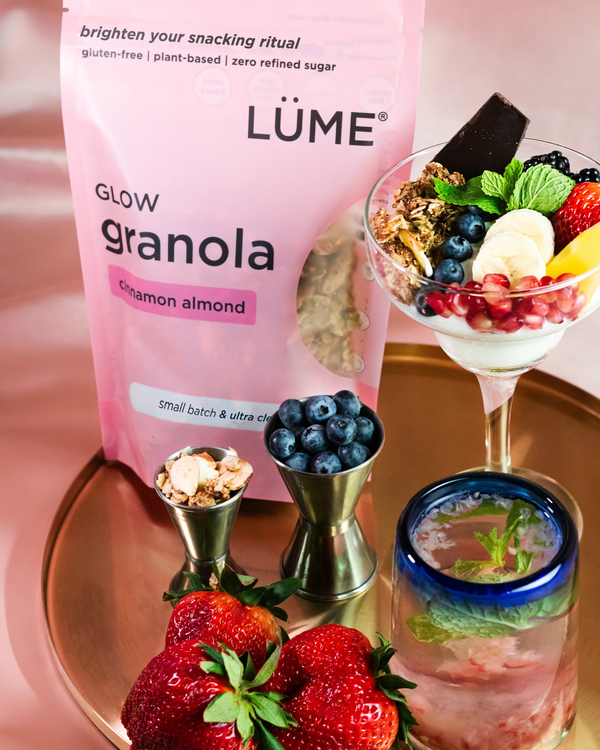
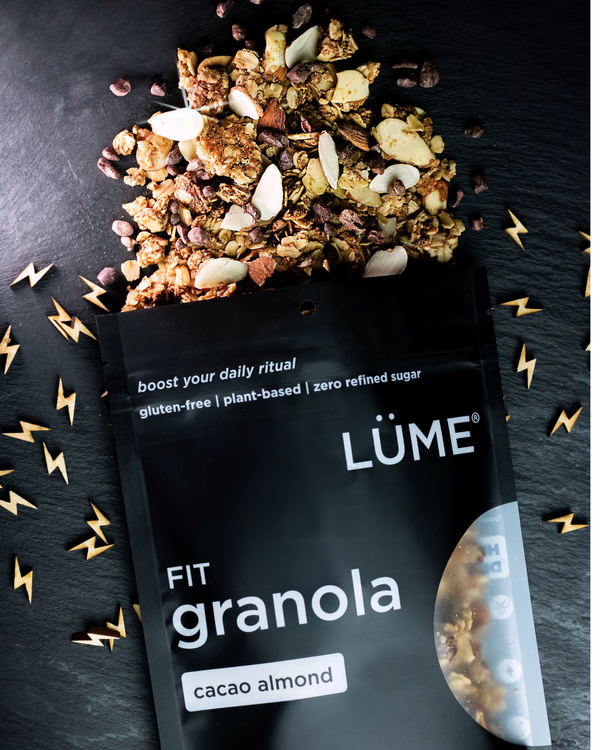
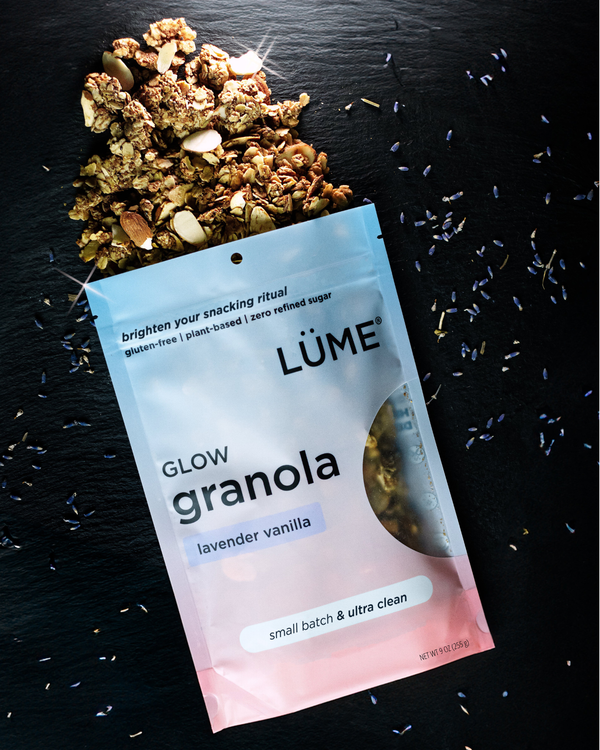
So we use real vanilla bean, real lavender flowers, real cacao, real Ceylon cinnamon, and real ginger. You can taste that philosophy in every batch we make: our Cinnamon Almond Granola is built on real Ceylon cinnamon and bourbon vanilla, our Lavender Vanilla Granola is made with actual lavender flowers and real vanilla bean, and our Cacao Almond Granola uses real cacao and organic yerba mate rather than a lab-built flavor system.
We don't want "Lavender Vanilla" to mean a lab-built flavor system. We want it to mean actual lavender and actual vanilla.
That's the difference between flavoring something and crafting something. Most brands are comfortable using natural flavors because they're legal, convenient, and familiar. We're not.
Our standard is simple: No natural flavors. No artificial flavors. Just real ingredients.
Because when you say you care about ingredients, what you're really saying is that you care about people.
The Bottom Line
Natural flavors are one of the most misunderstood ingredients in packaged food. They sound simple, but they can represent complex, proprietary systems. They sound clean, but they may be mostly solvents, carriers, emulsifiers, and preservatives. They sound like real food, but they're added for taste, not nutrition.
Are they always harmful? No. Are they always transparent? Also no. And that's the problem.
The goal isn't to fear food. The goal is to understand it. Because once you see how the industry uses a phrase like "natural flavors," you can decide for yourself what deserves a place in your pantry.
FAQ: Natural Flavors
What are natural flavors?
Natural flavors are flavoring ingredients derived from plant, animal, or fermentation sources. They're used to add or enhance flavor in foods and beverages, not to provide meaningful nutrition.
Are natural flavors bad for you?
They're generally considered safe when used as intended, and EWG rates them "lower concern." However, they're often far less transparent than consumers expect and may contain undisclosed carriers, solvents, emulsifiers, or preservatives with untested long-term health impacts from daily consumption.
Are natural flavors the same as artificial flavors?
Chemically, they can be nearly identical. The only legal difference is the source: natural flavors must originate from a natural source, while artificial flavors don't. The final flavor molecules can be exactly the same.
Do natural flavors contain real food?
They must originate from a natural source, but that's not the same as eating the real food. Natural flavors are typically extracted, concentrated, processed, and blended into a flavor system.
Can natural flavors contain hidden ingredients?
Yes. A flavor system can include solvents, carriers, emulsifiers, and preservatives, which EWG estimates can make up 80% to 90% of the mixture, without being listed individually on the label.
Can natural flavors cause allergies?
If a natural flavor contains one of the nine major food allergens, it generally must be disclosed under U.S. law. But people with non-major sensitivities can still have reactions.
Are natural flavors vegan?
Not always. They can be derived from plant or animal sources. Unless a product is certified vegan or the manufacturer confirms the source, the label may not make it clear.
Are natural flavors allowed in organic foods?
Yes, but under stricter USDA rules: organic flavors must be used when commercially available, and nonsynthetic flavors can't be produced using synthetic solvents, carrier systems, or artificial preservatives. However, an "organic natural flavor" is still a flavor system that can include solvents, carriers, and processing aids, and the finished label still compresses all of it into two words.
Why do companies use natural flavors?
For consistency, lower cost, shelf stability, more intense taste, and to increase repeat purchase and consumer perception. "Natural flavor" simply sounds cleaner than "artificial flavor."
How can I avoid natural flavors?
Read labels and choose products that use real ingredients: vanilla bean, cacao, cinnamon, fruit, herbs, spices, or single-ingredient extracts, instead of vague "natural flavors."
Does LÜME use natural flavors?
No. LÜME doesn't use natural flavor additives or artificial flavors. We use real food ingredients and extracts.
References
- FDA / eCFR: 21 CFR 101.22: Foods; labeling of spices, flavorings, colorings and chemical preservatives. ecfr.gov
- FDA / eCFR: 21 CFR 101.100: Food; exemptions from labeling. ecfr.gov
- FDA: Food Allergies (nine major allergens; FASTER Act / sesame). fda.gov
- USDA National Organic Program: Policy Memo 11-1: Use of Natural Flavors (updated March 2024). ams.usda.gov
- Environmental Working Group: "Natural and artificial flavor: What's the difference?" by David Andrews, PhD & Tasha Stoiber, PhD (March 19, 2026). ewg.org
- Environmental Working Group: Food Scores: Natural vs. Artificial Flavors. ewg.org
- Dunford EK, et al. "Food Additives in Ultra-Processed Packaged Foods": Journal of the Academy of Nutrition and Dietetics, via UNC Global Food Research Program. globalfoodresearchprogram.org
- FEMA: GRAS Program & Flavor Ingredient Library. femaflavor.org
- Statista: Flavor and fragrances market worldwide (industry concentration). statista.com
- Holland Hospital: "What Are 'Natural Flavors' and Are They Bad for You?" (Melissa Maccoux, MS, RDN). hollandhospital.org
- The Kitchn: "What Are Natural Flavors?" (Amy Shapiro, RD; August 2025). thekitchn.com
- International Food Information Council: 2025 IFIC Food & Health Survey (full report, January 13, 2026). ific.org