


PART I: HOW WE GOT HERE
Cottonseed Oil: From Cotton Waste to America’s First Industrial Fat
The modern seed oil story starts with a disposal problem.
Through the 19th century, cotton mills produced enormous quantities of cottonseed as a byproduct. It had little value. Some was used as fertilizer, some as cattle feed, and a great deal was simply dumped. A widely quoted line from Popular Science captured the trajectory: what was garbage in 1860 became fertilizer, then cattle feed, then table food within thirty years.
Procter and Gamble were, at the time, a soap and candle company that needed cheap fat. Animal tallow and lard were expensive and their prices were volatile. Cottonseed oil was abundant and nearly free.
The breakthrough was hydrogenation. By forcing hydrogen through liquid cottonseed oil under pressure, chemists could turn it into a white, solid fat that looked and cooked like lard. According to the American Oil Chemists’ Society, P&G chemist John Burchenal filed two US patent applications by late 1910 covering partially hydrogenated cottonseed oil and blends of fully hydrogenated with liquid cottonseed oil.
The product launched in June 1911 under a name derived from crystallized cottonseed oil: Crisco. It was the first food product built on partially hydrogenated oil, marketed relentlessly as cleaner, purer, and more modern than the animal fats it replaced. P&G distributed an illustrated recipe book, courted grocers and dietitians, and positioned a chemically transformed industrial byproduct as a scientific advance in the kitchen.
It worked. And the hydrogenation that made Crisco possible is the same process that produced artificial trans fats, which the FDA eventually determined were not generally recognized as safe and effectively removed from the food supply. The first great seed oil success story was, decades later, reversed on health grounds.
Sound familiar? In the 1930’s, thousands of American doctors promoted the use of smoking cigarettes before it was widely linked to cancer in the 1940’s and 1950’s, at which point a major transition occurred.
Cigarette companies also wanted doctors to smoke their brands. Companies like Phillip Morris and RJ Reynolds participated in medical conventions by sponsoring doctor lounges, giving away free cigarettes & more. RJ Reynolds also created a “Medical Relations Division”, which was based out of a Reynolds advertising firm. This firm focused on promoting Camel cigarettes by locating researchers who could substantiate medical claims that these companies were using in advertisements. These cigarette companies were now able to refer to research findings in their advertisements, both to consumers and to physicians.
We’re not saying seed oils are the equivalent of smoking cigarettes, but we’re showing you how these corrupt systems work behind the scenes amongst many different industries over time.
Canola: The Machine Lubricant Chapter
Rapeseed oil has a physical property most oils lack: it clings to metal surfaces that are wet or steam-washed. That made it an unusually good lubricant once steam power arrived. Britannica states it plainly: rapeseed oil was long used industrially to lubricate engines and machine parts, and because of its high erucic acid content it was not considered safe for human consumption, though it was sometimes added to animal feed.
Demand spiked during the Second World War, when naval and merchant steam engines needed it in volume and European and Asian supply lines were cut. Canada expanded rapeseed production onto the prairies to fill the gap.
Then the war ended, diesel replaced steam, and the market evaporated. Canada was left with an established crop and no buyers.
What happened next is documented by the industry itself. SaskCanola recounts how Dr. Keith Downey and colleagues, working with Baldur Stefansson, bred rapeseed in the early 1970s to strip out erucic acid and the bitter glucosinolates that made it unusable. Statistics Canada confirms both compounds were the main barrier to edible oilseed production.
The result was renamed in 1978 by the Western Canadian Oilseed Crushers Association: canola, a contraction of “Canadian oil, low acid.” To carry the name, the oil must contain less than 2 percent erucic acid.

The correction that matters
You will see the claim that canola oil was invented as an engine lubricant. Precisely: rapeseed oil was the lubricant, and canola is a cultivar bred afterward for human consumption. The crop existed for an industrial market, that market collapsed, and a decade of breeding work followed to make it edible. Statistics Canada frames this openly as researchers identifying an edible-oil market as a “potential saviour” for a damaged sector.
The 1,000-Fold Shift
The scale of the change is the part most people underestimate.
The standard reference is a reconstruction published in the American Journal of Clinical Nutrition by Blasbalg and colleagues, which used economic disappearance data across 373 food commodities to model US fatty acid consumption from 1909 to 1999. Its central findings are still cited in reviews published in 2026:
- Estimated per capita consumption of soybean oil increased more than 1,000-fold
- Dietary linoleic acid availability rose from 2.79 percent to 7.21 percent of total energy
- The ratio of linoleic acid to alpha-linolenic acid rose from 6.4 to 10.0
Over a single century, one ingredient that was functionally absent from the American diet became a primary source of calories, while traditional cooking fats declined in rough proportion.
For the present-day figure, the most defensible number comes from the soy industry’s own scientific body. SNI Global states that soybean oil alone accounts for roughly 57 percent of US edible oil consumption and more than 7 percent of total US caloric intake. We cite the industry’s own number deliberately.
For a physical sense of the volume: USDA’s Food Availability data put US cooking oil consumption at 53.6 pounds per person per year, which works out to close to five tablespoons of refined oil per person, per day. That is also the most recent figure anyone has. After the Census Bureau terminated the reporting program USDA relied on, the agency states that data on added fats and oils, except butter, can no longer be updated. Butter is still tracked through 2017. Seed oils stop at 2010.
Why the Food Industry Uses Seed Oils
None of the reasons are nutritional. All of them are operational.
1. Cost. This is the whole ballgame. Pure coconut, avocado or olive oil runs roughly $4 to $5+ per pound. Seed oils run roughly $0.50 to $1.50 or less. At scale, that spread compounds across every unit shipped.
2. Neutrality. Refining, bleaching, and deodorizing strip out color, odor, and flavor. Manufacturers want a fat that disappears into the product.
3. Heat stability and smoke point. Refined seed oils tolerate commercial fryers and high-temperature processing lines that certain cold-pressed oils cannot.
4. Shelf life. Long, predictable, and consistent across batches and seasons.
5. Supply reliability. Soybean oil is the most widely used vegetable oil in the United States, accounting for more than 50 percent of all domestic vegetable oil use, per USDA’s Economic Research Service.
6. Interchangeability. Because refining makes different seed oils functionally similar, manufacturers can swap between them on commodity pricing without reformulating. This is precisely why “vegetable oil” exists as a label term. It is procurement flexibility, not obfuscation for its own sake. The effect on the shopper is the same either way.
How Big the Seed Oil Industry Actually Is
According to USDA’s Foreign Agricultural Service, global vegetable oil production for 2025/26 was forecast to grow roughly 3 percent to nearly 235 million metric tons, a record.
| Oil | 2025/26 global production |
|---|---|
| Palm oil | ~80 million metric tons |
| Soybean oil | ~71 million metric tons |
| Rapeseed / canola oil | ~34.5 million metric tons |
| Sunflower oil | ~21.9 million metric tons |
The IMF’s benchmark price for soybean oil averaged $1,257 per metric ton in the first quarter of 2026. At a blended price of $1,000 to $1,300 per ton, 235 million metric tons works out to roughly $235 billion to $305 billion a year, call it a quarter of a trillion dollars at wholesale. Treat that as an estimate, and as a floor: it captures the raw commodity before refining, packaging, distribution, and retail margin.
The trade is concentrated in five names: Archer Daniels Midland, Bunge, Cargill, Louis Dreyfus Company, and Wilmar International.
And soybean oil is not only food. USDA data shows it accounts for more than 40 percent of feedstocks for biomass-based diesel, meaning demand is propped up by biofuel mandates that have nothing to do with whether anyone should eat it.
PART II: WHAT WE’RE ACTUALLY EATING
What Are Seed Oils, and What Is Refinement?
Seed oils are cooking oils extracted from the seeds of plants, then refined, bleached, and deodorized into a neutral, shelf-stable, high-smoke-point liquid.
The industry has its own name for it. Harvard’s Nutrition Source calls the top four oils consumed in the United States, soybean, canola, palm, and corn, RBD oils, for refined, bleached, deodorized. The process runs in three stages: the seed is crushed to express what oil it will give up, the crushed material is washed with a low-boiling solvent, most commonly hexane, to strip out the remainder, and the result is deodorized at temperatures above 200°C, sometimes as high as 235°C, under vacuum.
This is a yield-maximizing industrial extraction, not pressing. Cold-pressed oils do not use this.
The eight most commonly discussed seed oils are canola (rapeseed), corn, cottonseed, grapeseed, rice bran, safflower, soybean, and sunflower. What they share has little to do with being seeds:
- Solvent-extracted at industrial scale, then refined, bleached, and deodorized
- Sold as commodities and priced far cheaper than healthier oils
- Engineered to be neutral, invisible, and interchangeable
- Consumed in large cumulative quantities, largely without the eater choosing them
- Frequently held at frying temperature, sometimes for hours, & sometimes reused
Three distinctions that get collapsed constantly
Olive oil, coconut oil and avocado oil are not seed oils. They are pressed from fruit or flesh rather than seed. This is why a product can be seed-oil-free and still contain plenty of fat.
Seeds are not seed oils. Whole flaxseed and whole chia seed are intact foods with fiber, protein, and their own antioxidants still attached. A refined oil is a single macronutrient stripped out of that matrix at industrial scale.
Refined is not the same as cold-pressed, even within one plant. Harvard’s Nutrition Source draws this line explicitly: virgin and extra virgin olive oils are not solvent-extracted and not deodorized, while refined olive oil is processed exactly like the RBD oils.
There is also a labeling wrinkle worth knowing. The term “seed oil” appears nowhere on a US ingredient panel. You will see the individual oil named, or the catch-all “vegetable oil,” which in the American food supply most often means soybean oil, canola oil, or a blend.
Heat, Oxidation, and Time
This is the most scientifically interesting part of the processing argument, and it is worth walking through carefully rather than asserting.
The chemistry is not in dispute. Polyunsaturated fats contain multiple double bonds. Double bonds are the reactive sites where oxidation begins. Exposure to oxygen, heat, light, and time promotes that reaction, and once it starts it propagates: the fatty acid breaks down into secondary products including a family of reactive aldehydes.
The most studied of those is 4-hydroxynonenal (4-HNE), which forms specifically from omega-6 peroxidation. Its formation has been measured directly. Research in the Journal of the American Oil Chemists’ Society heated soybean oil to 185°C and found none in the unheated oil, with measurable amounts appearing within two hours at frying temperature and rising from there. The Scientific Foundation for the Dietary Guidelines for Americans, 2025-2030 acknowledges that seed oils contain fatty acids more prone to thermal oxidation.
Deodorization compounds this before the bottle is even sealed. Heating an oil above 200°C converts a share of its unsaturated fats into trans isomers. Harvard’s figures: canola 1.9 to 3.6 percent trans fat, soybean 0.4 to 2.1 percent, against extra virgin olive oil at 0.5 percent. Commercial frying pushes it higher. Canola used for fries seven hours a day for a week went from 2.4 to 3.3 percent.
Where the evidence stops
Here is the boundary, stated plainly. Reactive aldehydes form in polyunsaturated oil under heat. They are chemically capable of binding proteins and DNA in laboratory conditions. What has not been established is that dietary exposure at real-world levels produces disease in humans. The dose response has never been mapped, partly because human exposure to these compounds has not been well quantified in the first place.
So the honest version of the oxidation argument is not “oxidation causes disease.” It is narrower and, we think, more useful: fresh oil, oil held at frying temperature for hours, and oil reused across shifts are three chemically different substances, and only one of them is what a bottle label describes. That is a food-processing argument, not a fatty-acid argument, which is why it survives scrutiny better than the claims usually made alongside it.
Dose, Daily Exposure, and What the Oil Is Carrying
Refined seed oils appear across essentially every aisle: chips and crackers, commercial dressings and mayonnaise, breads and buns, packaged cookies, frozen entrées, sauces, coatings, seasoning packets, protein bars, nut butters, granolas, and the fryer oil in most restaurants. A single ultra-processed product can contain seed oil in several separate components at once: soybean oil in the dough, sunflower oil in the coating, a vegetable oil blend in the sauce.
Two current market signals show how consumers are responding: a nationwide survey reported alongside 2025 SPINS retail data found 28 percent of US consumers are actively avoiding seed oils, and by mid-2026 SPINS put Seed Oil Free Certified products at roughly $410 million in retail sales across 50-plus brands.
They Are in Infant Formula Too
This exposure starts on day one of life.
Many commercial infant formulas contain no milk fat, or very little. The fat, which supplies roughly half the calories in a bottle, can come entirely from a blend of vegetable oils formulated to approximate the fatty acid profile of breast milk. Check almost any label and the same short list appears.
Soy oil, canola oil, high-oleic sunflower or safflower oil are therefore structural ingredients in the first food many American babies ever eat, often as their sole source of nutrition for six months.
FDA regulations require formula to hit a specific fat profile for development and many of these oils are pushed as the sole options.
Current FDA fatty acid rules specify a minimum linoleic acid requirement and no maximum. An expert panel review published in Advances in Nutrition in January 2026, following the FDA’s Operation Stork Speed nutrient review, concluded that evidence supports establishing a maximum. There is a floor. There is no ceiling. That standard was last meaningfully revisited in 1998.
PART III: THE HEALTH QUESTION
But Doesn’t the Research Say Seed Oils Are Healthy?
A great deal of it does, and we are going to present that case properly rather than skip past it.
Major cardiovascular bodies recommend replacing saturated fat with polyunsaturated fat, and the trial evidence behind that recommendation is real. A 2020 Cochrane meta-analysis of roughly 59,000 participants across 15 randomized controlled trials found the swap reduced combined cardiovascular events by about 21 percent. A May 2025 JAMA Internal Medicine study following 221,054 adults for up to 33 years linked substituting plant oils for butter with a 17 percent lower risk of death.
The inflammation hypothesis has also largely failed its tests. Research presented at NUTRITION 2025 by Kevin C. Maki, PhD of Indiana University analyzed 1,894 people using blood biomarkers rather than diet questionnaires and found higher plasma linoleic acid associated with lower inflammatory markers and better glucose measures.
But notice what question that research answers
Those trials are almost entirely comparative, and the comparison is narrow: is polyunsaturated fat better or worse than saturated fat for cardiovascular outcomes, measured over four or five years?
On that question the answer leans toward the seed oils. However, there are studies that have been hidden for years such as the Minnesota Coronary Experiment that tested whether replacing saturated fat with linoleic-acid-rich corn oil would reduce heart disease and death. This study found that greater cholesterol reduction was actually associated with a higher risk of death in participants aged 65 and over. It remains one of the largest studies of its kind. We’ll talk more about this later.
It is also not the same question as: is a highly refined, omega-6-rich commodity oil, consumed daily across thousands of products and many times repeatedly heated in commercial fryers, truly safe?
Nobody has run that trial. The existing literature compares one fat against another fat inside a diet that already contains a great deal of both. It does not test the exposure pattern that actually characterizes American eating.
Why We Don’t Trust Refined Seed Oils
First, the obvious objection
If linoleic acid were the entire argument, the objection would be fair: olive oil contains it. So does avocado oil. Nuts and seeds contain it too.
But that is not the argument.
The question is what happens when an omega-6-rich fatty acid is isolated into a highly refined commodity oil, concentrated, consumed in large quantities, exposed to heat and oxidation, and added throughout the modern packaged-food supply.
That distinction matters.
| Oil | Linoleic acid, share of total fat |
|---|---|
| Coconut | ~2% |
| Extra-virgin olive | ~7 to 15% |
| Avocado | ~12.5% |
| Canola | ~19% |
| Soybean | ~55% |
| Corn | ~58% |
| Conventional sunflower | ~68 to 71% |
| Conventional safflower | ~75 to 79% |
Olive oil carries substantially less linoleic acid than soybean, sunflower, or safflower oil. It is also typically used as a recognizable culinary ingredient rather than disappearing into thousands of packaged foods. Extra-virgin olive oil is mechanically extracted and retains naturally occurring compounds that are largely absent from highly refined commodity oils.
So we are not arguing that linoleic acid = bad.
We are asking a different question:
Why have we made highly refined, omega-6-rich commodity oils such a dominant part of the modern food supply and what does that level of exposure mean over decades?
What we are pointing at is industrial refinement, heat, reuse, concentration, and cumulative volume, which are the conditions under which these oils are commonly used at scale.
That is the question worth examining.
The evidence, sorted by what kind of evidence it is
Not all evidence carries the same weight.
Some research follows large groups of people over time. Some directly changes dietary exposure in humans. Some examines biological mechanisms. Some comes from animal models.
Those are not interchangeable.
Here is what the research actually shows and where the biggest unanswered questions remain.
Human observational evidence
Inflammatory bowel disease. The European Prospective Investigation into Cancer and Nutrition followed 203,193 adults across five countries. Published in Gut, the analysis found participants in the highest quartile of linoleic acid intake had roughly 2.5 times the risk of developing ulcerative colitis (OR 2.49, 95% CI 1.23 to 5.07), with a dose-response trend across quartiles. The authors estimated about 30 percent of cases were attributable to intakes above the lowest quartile.
This is meaningful because it is prospective, large, and shows a dose-response relationship. But it remains observational: dietary intake was estimated through food-frequency questionnaires, only 126 cases occurred, and the association cannot by itself establish causation.
Colorectal cancer incidence. Colorectal cancer is now the leading cause of cancer death in American adults under 50. Per the American Cancer Society’s Colorectal Cancer Statistics 2026, incidence rose 3 percent per year in adults aged 20 to 49 while falling 2.5 percent per year in those 65 and older, with increases concentrated in cohorts born after the 1950s.
The pattern is real. The cause is not established. The postwar era changed dozens of variables at once, including obesity, sedentary behavior, antibiotic exposure, microbiome development, and ultra-processed food consumption.
That makes this an important backdrop to the question, not proof of a seed-oil connection.
Human intervention evidence
Oxidation products are diet-modifiable. Linoleic acid can be converted into oxidized linoleic acid metabolites (OXLAMs). Christopher Ramsden, MD, and colleagues at NIH conducted a 12-week dietary intervention in which participants reduced linoleic acid intake. Circulating OXLAMs fell significantly.
That matters because it establishes a controlled human link between dietary exposure and these metabolites.
What it does not establish is that lowering OXLAMs prevents disease.
Those metabolites track disease severity. Plasma OXLAMs are elevated in Alzheimer’s dementia and non-alcoholic steatohepatitis, and levels have been associated with disease severity in NASH. Researchers have proposed them as potential biomarkers.
Again, this is a meaningful biological connection, but association with disease is not the same as proving that dietary linoleic acid caused the disease.
Mechanistic evidence
A cancer growth pathway. In March 2025, researchers at Weill Cornell Medicine published in Science that linoleic acid binds a protein called FABP5, activating mTORC1, one of the central growth pathways in cell biology.
The effect was specific to triple-negative breast cancer cells, where FABP5 is abundant. The researchers also found elevated FABP5 and linoleic acid in tumors and blood from newly diagnosed patients.
This is important because it offers a specific biological mechanism connecting linoleic acid to tumor signaling rather than simply observing an association.
But it remains preclinical and subtype-specific. A mechanism is not the same thing as proof of a dietary cause of cancer in humans.
Tumor lipid profiling. In December 2024, researchers at USF Health and Tampa General published in Gut, profiling bioactive lipids in 162 tumor samples. Inside colon tumors, they found an excess of molecules that promote inflammation and a shortage of molecules involved in resolving it. Timothy Yeatman, MD, described the result as cancer behaving like a chronic wound that will not heal.
The work was funded by a five-year, $3.1 million NIH grant rather than industry.
The finding matters because it demonstrates that a distinct inflammatory lipid environment exists inside human colon tumors.
But the study did not record patients’ dietary intake, so it cannot tell us whether seed-oil consumption created that environment.
Animal evidence
Gut microbiome disruption, with a control that matters. Poonamjot Deol, PhD, and Frances Sladek, PhD, at UC Riverside fed mice a high-soybean-oil diet for up to 24 weeks and published their findings in Gut Microbes.
Beneficial bacteria declined while adherent invasive E. coli, a strain implicated in human IBD, increased. The researchers also found changes in endocannabinoids, molecules involved in regulating gut inflammation.
But the most interesting part of the experiment was the comparison.
Olive oil fed to the same mice did not increase colitis susceptibility.
Both oils contain linoleic acid. Under the same experimental conditions, they did not produce the same result.
That does not tell us exactly why. The difference could involve fatty-acid composition, minor compounds, processing, oxidation, or other characteristics of the oils.
But it does challenge the idea that the findings can simply be dismissed as “all dietary fat is the same.”
Deol’s framing of the dose question is also notable. Her team compared the roughly 1 to 2 percent of daily energy from linoleic acid they associate with a Paleolithic diet with the estimated 8 to 10 percent Americans consume today. That comparison is the research team’s own benchmark, not an official dietary recommendation.
Dose realism. In another mouse model, colitis-prone animals fed roughly 9 percent of calories from linoleic acid, approximately the level Americans consume developed elevated pro-inflammatory eicosanoids and worsened colitis compared with controls receiving 3 percent.
This is relevant because the exposure was not simply an artificially enormous laboratory dose.
It is still animal evidence, however. Mouse biology is not human biology, and findings that look compelling in animals do not always translate into human disease.

So what does the evidence actually tell us?
This is where the conversation needs nuance, but not paralysis.
The evidence does not prove that refined seed oils cause chronic disease in humans.
But neither does it justify treating them as unquestionably benign simply because some studies show benefits when polyunsaturated fats replace saturated fats.
What we have is a body of evidence pointing to several different questions:
Large prospective human data has identified associations between higher linoleic acid intake and certain disease outcomes.
Human intervention studies show that dietary changes can alter circulating oxidation products.
Mechanistic research has identified biological pathways through which linoleic acid may influence inflammation and tumor growth in specific contexts.
Animal studies have found effects on the gut microbiome, inflammatory signaling, and colitis at exposures relevant to the modern diet.
And research increasingly shows that the form, processing, dose, and context of a fat matter.
None of those findings alone settles the debate.
Together, however, they give us enough reason to ask whether the modern food system has gone too far in making highly refined commodity oils a nearly invisible, everyday source of calories.
And there is one enormous question we still cannot answer:
What happens when a person consumes these oils every day, across thousands of meals, for decades?
That long-term randomized human trial incorporating refined seed oils in the form and quantity people actually encounter in the modern food supply, measured against hard disease outcomes, does not exist. That study is the one that would close the argument, and it has never been run. The reason is who would have to pay for it. Funding research from suppliers into whether its own crop contributes to cancer would be acting against its statutory mandate. Manufacturers have no reason to ask. A trial long enough to detect a cancer signal would outlast most grant cycles.
So the most consequential question about the most transformed ingredient in the American diet sits unanswered, not because it is unanswerable, but because nobody with the resources has wanted the answer.
That matters.
Why LÜME chooses differently
We don’t need to prove that seed oils are uniquely responsible for modern disease to make a different formulation choice. We do not use refined commodity seed oils.
We don’t need them to make great food. We can formulate around whole-food fats and unrefined ingredients instead. That means we don’t have to settle every scientific debate about linoleic acid, oxidation, or long-term exposure before deciding what belongs in our food.
If an ingredient is unnecessary, highly refined, and surrounded by meaningful unanswered questions, why use it?
We’d rather not.
You decide
We are not going to tell you what to eat. Here is where things stand. These oils originally entered the food supply as industrial byproducts rather than as foods. They now supply close to five tablespoons a day per American, most of it in packaged products nobody chose deliberately, but we expect it’s even higher now. Seven independent lines of research point toward harm. The trial that would settle it for good has not been funded, and the research that reassures you is substantially paid for by the people selling these seed oils.
Given all of that, whether refined seed oils belong in your kitchen is your call to make. We have made ours.
PART IV: WHY LÜME SAYS NO
Follow the Money, Then Follow the Methodology
Industry funding is worth knowing about. It does not by itself make a finding false, and we want to be clear about that before laying out the record.
The soy checkoff
The United Soybean Board is a federal commodity checkoff program overseen by USDA’s Agricultural Marketing Service, funded by a mandatory assessment on soybean sales. Per USDA AMS, assessments were $150.5 million in 2023 and $124.9 million in 2024. USB states its purpose plainly on its own site: to create profit opportunities for US soybean farmers.
On seed oils specifically, USB has been explicit. In an April 2025 post on its own website, a USB farmer-leader who also sits on the board of the Soy Nutrition Institute described the checkoff as investing “to protect U.S. soybean farmers’ stake in the edible oils market.” The same post describes the effort as reclaiming the narrative around seed oils.
The research body
SNI Global was, by its own account, founded in 2004 through the initiative of the United Soybean Board. Its stated function includes identifying, developing, and funding soy-related research priorities.
The most widely circulated recent defense of seed oils is a scoping narrative review published in Critical Reviews in Food Science and Nutrition in April 2026, concluding that concerns about industrially produced seed oils are without scientific foundation. Its author list includes Mark Messina of Soy Nutrition Institute Global, and SNI Global issued the press release promoting it.
The certification mark
The American Heart Association’s Heart-Check mark is a licensing program, not an independent verdict rendered on a product. Manufacturers apply, pay annual per-product fees, and sign a certification mark license agreement. The AHA’s own Heart-Check Food Certification Program Guide confirms tier-based pricing, offering the example of a company with $50 million to $75 million in revenue paying $35,000 for 75 licenses. And per SNI Global’s own members page, SNI Global participates on behalf of the United Soybean Board as a member of the AHA’s Industry Nutrition Forum.
Now follow the methodology
Funding tells you where to look. It does not tell you what you will find. So look at the studies themselves.
The research that most reassures consumers about seed oils shares a consistent design profile: it compares one fat against another, over a few years, using intermediate markers or cardiovascular endpoints, in populations already consuming both. Those are legitimate studies answering a legitimate question. They are not designed to detect what decades of refined oil consumption across ultra-processed foods might do, and they were never intended to.
A documented case shows why methodology and publication both matter. The Minnesota Coronary Experiment, a double-blind randomized trial of 9,423 people conducted from 1968 to 1973, tested whether replacing saturated fat with linoleic-acid-rich corn oil would reduce heart disease and death. The full dataset went unpublished for more than four decades until Christopher Ramsden, MD at NIH recovered it and published in The BMJ in 2016. Serum cholesterol fell 13.8 percent in the intervention group versus 1.0 percent in controls, with no mortality benefit and participants aged 65 and over, greater cholesterol reduction was associated with higher risk of death.
The authors’ conclusion is the line that matters: incomplete publication has contributed to overestimating the benefits of replacing saturated fat with vegetable oils.
The trial had real limitations, including an institutionalized population, and its recovery did not settle the underlying question. What it establishes is narrower and still important: the published literature is not the complete literature, and evaluating nutrition science means asking what was measured, for how long, and what never made it into print.
The 2026 Avocado Oil Scandal: A Transparency Failure
In July 2026, researchers in the lab of Selina Wang, PhD, Professor of Cooperative Extension in the UC Davis Department of Food Science and Technology, published findings in Applied Food Research. They tested 54 processed foods purchased in 2025 and 2026, all of which listed avocado oil as the only oil ingredient.
They found 48 of the 54 were adulterated with cheaper oils. Broken out: 93 percent of chips, 71 percent of mayonnaises, and 100 percent of salad dressings failed.
The methodology was deliberately conservative. Researchers measured fatty acids and sterols, the chemical fingerprints unique to each oil, and tested whether frying, blending, and emulsifying would distort those fingerprints. The changes were minimal. They then gave every sample a 10 percent margin of deviation for natural variation. Even with that allowance, 89 percent still failed. Every product was purchased in two separate lots and tested twice.
The control group makes the result damning. Applying identical purity tests to 20 olive oil-labeled processed foods, only one failed. The difference is not chemistry. It is scrutiny. Olive oil authenticity has been policed for decades. Avocado oil is a newer, more expensive category nobody has been watching.
Wang has been careful about assigning blame. Many manufacturers buy through third-party brokers and may not know what they received. “I don’t think there is enough accountability throughout the supply chain,” she said. The study received no outside funding.

What Would Change Our Mind
We think a brand making claims about an ingredient should be willing to say what would falsify its position. Here is ours.
What we are not claiming
We are not claiming that omega-6 fats are harmful. We are not claiming that every food containing linoleic acid is a problem. The gradient matters, and it runs roughly like this:
| Whole foods containing omega-6 | Nuts, seeds, poultry, eggs. Consistently associated with good outcomes. No concern. |
| Whole seeds and nuts | Fat inside an intact matrix with fiber, protein, and antioxidants. This is what LÜME uses. |
| Cold-pressed, unrefined oils | Deliberately bought, stored properly, used in measured amounts. A different product entirely. |
| Refined commodity seed oils | Solvent-extracted, bleached, deodorized, consumed largely without knowing they’re there. This is the category we avoid. |
| Repeatedly heated commercial frying oil | The same oils after hours at temperature and multiple reuses. Chemically furthest from where they started. |
Chris Kresser, M.S., L.Ac., writing on healthy fats, draws the distinction cleanly: with adequate omega-3 intake, omega-6 from whole-food sources such as nuts, seeds, and poultry is unlikely to be a problem. We agree.
Here is the question we think matters most, and it is not the one the debate usually asks.
Why are we adding isolated industrial oils to foods that do not need them?
How to Spot Seed Oils on a Label
1. Learn the names. Soybean, canola, rapeseed, corn, cottonseed, sunflower, safflower, grapeseed, rice bran. Also watch for “high oleic” versions, which are still refined commodity oils.
2. Treat “vegetable oil” as a seed oil. When the specific oil isn’t named, assume soybean, canola, or a blend.
3. Check every component, not just the first oil. Coatings, fillings, sauces, doughs, and seasoning packets can each carry their own. Salad kits and ramen cups often hide it in a separate sachet.
4. Read past the front of the package. Products advertising olive oil on the front sometimes list canola or sunflower in the ingredients. The front panel is marketing; the ingredient list is the disclosure.
5. Do not assume organic means seed-oil-free. Organic sunflower oil is organic and it is a seed oil. The two claims answer different questions.
6. “0g trans fat” on an oil bottle does not mean zero. Deodorization creates trans isomers in every RBD oil. The bottle can still say zero because FDA rules allow anything under 0.5 grams per serving to be declared as 0 grams, and a serving is one tablespoon.
7. Shorter ingredient lists solve most of this automatically. Foods with five to ten recognizable whole ingredients rarely have room for a refined oil to hide.
The same logic applies to the other big label loophole: see what “natural flavors” actually means.
The LÜME Standard
We don’t add refined, isolated, industrially extracted oils to our food at all. That is a broader standard than “no seed oils,” and it is the standard that matters. Refining, bleaching, and deodorizing exist to make a fat invisible: no color, no flavor, no character, maximum shelf life, minimum cost. Every one of those properties serves the manufacturer.
Our fat comes from ingredients you would recognize on a counter:
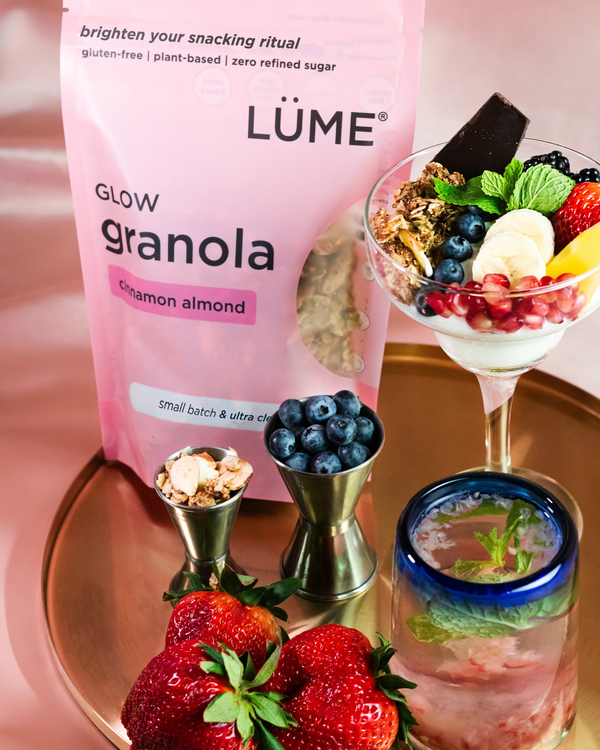
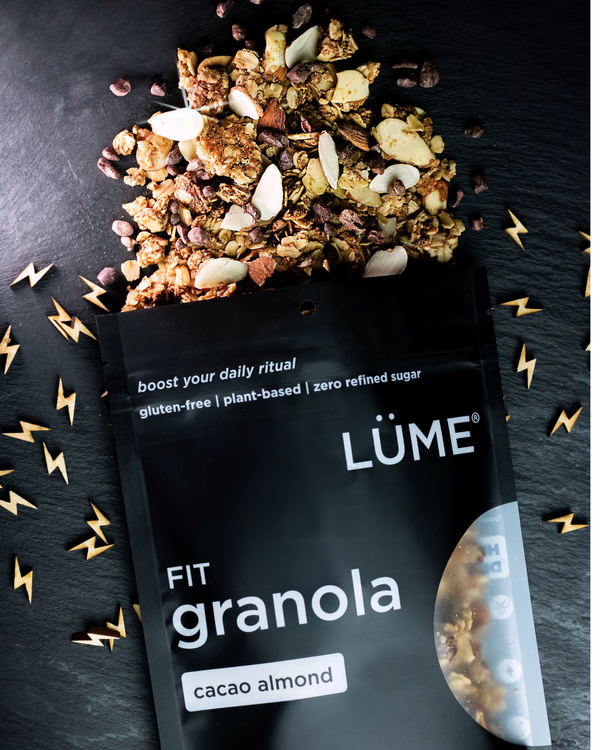
- Almonds, the base of our Cinnamon Almond and Cacao Almond granola
- Cold-pressed, virgin, unrefined organic coconut oil, pressed from the flesh of a drupe rather than a seed.
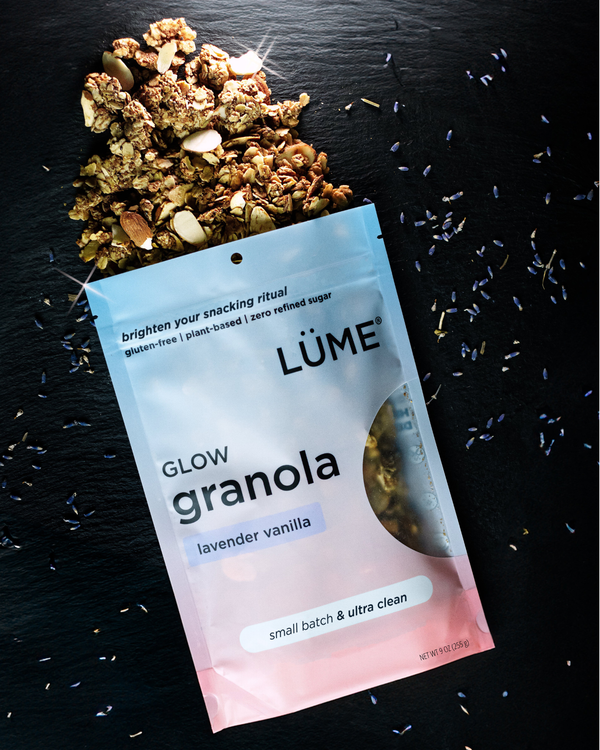
- Whole flaxseed and whole chia seed, intact, with their fiber and protein still in place, in every batch including Lavender Vanilla

The Bottom Line
Seed oils entered the food supply as a solution to industrial surplus, not as a nutritional advance. Cottonseed oil was mill waste. Rapeseed oil greased steam engines before Canadian breeders spent a decade making its descendant edible. Within a century, one ingredient went from functionally absent to a primary calorie source in the American diet.
What we would ask you to take from this is not fear of an ingredient. It is a sharper set of questions. What is this oil? How much of it am I eating on a daily basis across many types of foods? How was it processed, and how many times has it been heated? Do the companies selling it really have my best interest at heart?
Ask those and you will not need anyone, including us, to tell you what to think.
References
- UC Davis: “That Avocado Oil Chip You’re Eating May Not Be Made With Pure Avocado Oil” (July 15, 2026). ucdavis.edu
- Applied Food Research: “Authenticity of avocado and olive oils used as ingredients in commercially processed foods” (Wang lab, UC Davis, 2026). sciencedirect.com
- Selina Wang, PhD, UC Davis Department of Food Science and Technology, faculty profile. foodscience.ucdavis.edu
- Britannica: Rapeseed oil (industrial lubricant use; erucic acid; 1970s Canadian hybrid). britannica.com
- Statistics Canada: “Canadian Agriculture at a Glance: Canola, a Canadian success story.” statcan.gc.ca
- SaskCanola: “Canola becomes a crop” (Downey and Stefansson breeding history). saskcanola.com
- American Oil Chemists’ Society: “The Battle Over Hydrogenation (1903-1920)” (Burchenal patents; Crisco naming). aocs.org
- Blasbalg TL, et al. “Changes in consumption of omega-3 and omega-6 fatty acids in the United States during the 20th century.” American Journal of Clinical Nutrition. ajcn.nutrition.org
- USDA Foreign Agricultural Service: Oilseeds, World Markets and Trade (2025/26 global vegetable oil production). fas.usda.gov
- USDA Economic Research Service: “Examining Record Soybean Oil Prices in 2021-22” (soybean oil share of US vegetable oil use). ers.usda.gov
- USDA Agricultural Marketing Service: Soybean Research and Promotion Program (checkoff assessments, 2023 and 2024). ams.usda.gov
- United Soybean Board: “Fighting Misinformation, Protecting Your Bottom Line” (April 3, 2025). unitedsoybean.org
- Minnesota Soybean: “Food for thought: Council director joins Soy Nutrition Institute” (SNI Global founding by USB). mnsoybean.org
- SNI Global: Members page (AHA Industry Nutrition Forum and IFIC participation on behalf of USB). sniglobal.org
- SNI Global: “Soybean Oil Can Positively Contribute to A Healthful Diet” (share of US edible oil and caloric intake). sniglobal.org
- Nagra M, Goldman DM, Belury MA, Messina M. “Concerns about the health effects of industrially produced seed oils are without scientific foundation.” Critical Reviews in Food Science and Nutrition (April 2026). pubmed.ncbi.nlm.nih.gov
- American Heart Association: Heart-Check Food Certification Program Guide (fee structure). heart.org
- Truth in Advertising: “Heart-Healthy Certification: The Price is the Right” (AHA spokesperson on annual per-product fees). truthinadvertising.org
- Maki KC, et al. Linoleic acid biomarker findings presented at NUTRITION 2025, American Society for Nutrition. eurekalert.org
- Businesswire / SPINS: “Retail Data Indicates Surging Demand for Seed Oil Free Certified Products” (June 24, 2025). businesswire.com
- The Food Institute: “Seed Oil Free Certifications Are Rising, But Are Seed Oils That Unhealthy?” (June 2026). foodinstitute.com
- Ramsden CE, Zamora D, Majchrzak-Hong S, et al. “Re-evaluation of the traditional diet-heart hypothesis: analysis of recovered data from Minnesota Coronary Experiment (1968-73).” BMJ. 2016;353:i1246. pmc.ncbi.nlm.nih.gov | pubmed.ncbi.nlm.nih.gov
- Rebuttal: “Diet-heart disease hypothesis is unaffected by results of analysis of recovered data from Minnesota Coronary Experiment.” BMJ (2016). pubmed.ncbi.nlm.nih.gov
- STAT News: “Records found in dusty basement undermine decades of dietary advice” (April 12, 2016). statnews.com
- USDA Economic Research Service: Food Availability (Per Capita) Data System, added fats and oils table (source of all per capita pound figures). ers.usda.gov
- USDA Economic Research Service: Food Availability Documentation, “Added Fats and Oils” section (termination of Current Industrial Reports; restaurant waste grease estimate). ers.usda.gov
- USDA Economic Research Service: Food Availability Data System FAQs (2000 reporting artifact; data system does not measure actual consumption). ers.usda.gov
- FDA: Operation Stork Speed, infant formula nutrient review (launched March 18, 2025). fda.gov
- Advances in Nutrition: “Food and Drug Administration Expert Panel on Infant Formula Operation Stork Speed, June 2025: Part 1, Nutrient Considerations” (January 2026; minimum vs maximum linoleic acid). pmc.ncbi.nlm.nih.gov
- Siegel RL, et al. “Colorectal cancer statistics, 2026.” CA: A Cancer Journal for Clinicians (March 2026). acsjournals.onlinelibrary.wiley.com
- American Cancer Society: “Colorectal Cancer Drops in Older Adults and Rises in Younger Ones” (March 2, 2026). cancer.org
- Soundararajan R, Maurin MM, Gowda SGB, et al. “Integration of Lipidomics with Targeted, Single Cell, and Spatial Transcriptomics Defines an Unresolved Pro-Inflammatory State in Colon Cancer.” Gut (December 2024). doi:10.1136/gutjnl-2024-332535. gut.bmj.com
- USF Health: “How ultra-processed foods may drive colorectal cancer risk” (Yeatman and Halade). usf.edu
- Colon & Rectal Surgery of New York: “The Link Between Seed Oils, Processed Foods, and Colorectal Cancer” (secondary summary of the Gut study). colonandrectalsurgeryofnewyork.com
- International Monetary Fund via Federal Reserve Bank of St. Louis: Global price of Soybeans Oil, Q1 2026 ($1,257.33 per metric ton). fred.stlouisfed.org
- FAO Food Price Index: Vegetable Oil Price Index, July 2026 (195.7 points, highest since June 2022). fao.org
- Kresser C., M.S., L.Ac. “Healthy Fats: What You Need to Know” (omega-6 from whole foods vs. industrial seed oils). chriskresser.com
- IBD in EPIC Study Investigators (Tjonneland A, et al.). “Linoleic acid, a dietary n-6 polyunsaturated fatty acid, and the aetiology of ulcerative colitis: a nested case-control study within a European prospective cohort study.” Gut. 2009;58(12):1606-1611. pubmed.ncbi.nlm.nih.gov
- Nature Reviews Gastroenterology & Hepatology: “High dietary intake of linoleic acid more than doubles the risk of ulcerative colitis.” nature.com
- UC Riverside: “Widely consumed vegetable oil leads to an unhealthy gut” (Deol, Sladek, Borneman; Gut Microbes). news.ucr.edu
- “Effects of linoleic acid-rich diet on plasma profiles of eicosanoids and development of colitis in Il-10-/- mice” (LA at ~9 Cal%, matching US intake). ncbi.nlm.nih.gov
- Deol P, et al. “P2-HNF4alpha alters linoleic acid metabolism and mitigates soybean oil-induced obesity: role for oxylipins.” Journal of Lipid Research, October 2025. doi.org
- Koundouros N, et al. “Direct sensing of dietary omega-6 linoleic acid through FABP5-mTORC1 signaling.” Science, March 14, 2025 (Weill Cornell Medicine; senior author John Blenis, PhD). news.cornell.edu
- Ramsden CE, et al. “Lowering dietary linoleic acid reduces bioactive oxidized linoleic acid metabolites in humans.” Prostaglandins, Leukotrienes and Essential Fatty Acids. sciencedirect.com
- Schuster S, et al. “Oxidized linoleic acid metabolites induce liver mitochondrial dysfunction, apoptosis, and NLRP3 activation in mice.” pmc.ncbi.nlm.nih.gov
- “Oxidized metabolites of linoleic acid as biomarkers of liver injury in nonalcoholic steatohepatitis.” pmc.ncbi.nlm.nih.gov
- “Historical rise of cancer and dietary linoleic acid: Mechanisms and therapeutic strategies” (review). pmc.ncbi.nlm.nih.gov
- The Conversation: “Fat in common cooking oils is linked to aggressive breast cancer, but here’s why you shouldn’t panic” (counterweight; 2023 meta-analysis of 350,000+ women). theconversation.com
- Fatty acid composition of vegetable oils (linoleic acid share by oil type). Compiled from: Orsavova J, et al. “Fatty Acids Composition of Vegetable Oils and Its Contribution to Dietary Energy Intake.” Int J Mol Sci. pmc.ncbi.nlm.nih.gov
- Crosby G. “Ask the Expert: Concerns about canola oil.” Harvard T.H. Chan School of Public Health, The Nutrition Source (RBD processing, hexane residue levels, deodorization trans fat content, FDA 0.5g labeling threshold). hsph.harvard.edu
Medical Disclaimer
The content on this page is provided for general informational and educational purposes only. It is not medical advice, and it is not a substitute for diagnosis or treatment from a qualified healthcare professional.
LÜME is a food company, not a medical provider. Nothing here is intended to diagnose, treat, cure, or prevent any disease. Nutrition research evolves, individual needs differ, and a finding that applies to a population may not apply to you.
Always consult your physician, registered dietitian, or another qualified health provider before making changes to your diet, particularly if you are pregnant or nursing, feeding an infant, managing a medical condition, or taking prescription medication. Never disregard professional medical advice or delay seeking it because of something you read here.
If you are feeding an infant, follow the guidance of your pediatrician. Never make homemade infant formula and never dilute formula to make it last longer.